Your Mercedes Is Trying to Tell You Something — Here’s How to Actually Listen
There’s a certain irony to owning one of the most technologically advanced vehicles on the road and then being completely in the dark when something goes wrong with it. Mercedes-Benz builds some of the most capable and complex cars available today, but that complexity cuts both ways. When these vehicles develop problems, the symptoms can be subtle, the causes layered, and the wrong repair an expensive detour that doesn’t actually solve anything.
What tends to separate Mercedes owners who handle problems efficiently from those who end up in a cycle of repeat visits and mounting bills isn’t luck — it’s knowing what to look for and having access to a specialist who knows what to do with that information. In Brickell, where luxury vehicles are everywhere but qualified specialists are harder to find than they should be, that distinction carries real weight.
When the Warning Light Isn’t the Whole Story
Most people treat a warning light as the problem. In reality, it’s the car’s way of flagging that something in one of its many systems has moved outside of acceptable parameters. On a Mercedes-Benz, that could mean dozens of different things — some minor, some urgent, some that look unrelated but are actually connected at the module level.
This is where proper Mercedes Computers Diagnostics Brickell becomes the starting point for every serious repair conversation. Without it, you’re guessing. And with a vehicle that runs as many electronic control units as a modern Mercedes does — managing everything from engine timing to suspension damping to seat memory positions — guessing leads to parts being replaced that didn’t need replacing, while the actual issue quietly continues to develop.
What Mercedes-Specific Diagnostics Actually Involves
There’s a meaningful difference between plugging in a generic OBD2 scanner and running a full manufacturer-level diagnostic on a Mercedes. A generic tool reads emission-related fault codes that the federal government mandated all vehicles broadcast on a standardized protocol. That’s useful, but it represents maybe twenty percent of what’s actually happening inside a Mercedes at any given moment.
Mercedes-specific diagnostic platforms — like XENTRY, the system Mercedes-Benz itself uses — access every control unit in the vehicle. They read fault memory from the engine ECU, the transmission control module, the suspension control unit, the body control modules, the Electronic Ignition Switch, and more. They also allow technicians to run active tests: commanding actuators to move, reading live sensor data in real time, and performing guided diagnostics that walk through fault trees the way a factory engineer would.
For a Brickell Mercedes owner dealing with an unexplained warning light, intermittent performance issues, or a car that “just doesn’t feel right,” this level of diagnostic access is the only way to get a reliable answer. Anything less is an educated guess dressed up as a diagnosis.
Ignition Problems in Brickell Traffic: The Worst Place for a No-Start
Ignition issues have a way of making themselves known at the worst possible moments. You’re pulling out of a parking structure on Brickell Key, there’s a line of cars behind you, and your Mercedes hesitates — or worse, doesn’t start at all. Or it starts fine, makes it two blocks, and stalls at a light on Brickell Avenue during the evening rush.
These aren’t random events. They’re symptoms of a system that’s been degrading gradually — and that usually could have been caught earlier if the right diagnostic questions had been asked. Ignition Repair Brickell covers a range of issues, from the mechanical cylinder where the key physically inserts to the Electronic Ignition Switch module that authenticates the key and authorizes the engine to run. Both matter, and problems in either area produce symptoms that can look nearly identical from the driver’s seat.
How to Tell Which Part of the System Is Failing
This is where many owners — and many shops — go wrong. The impulse is to replace the most accessible component first and see if the problem goes away. On a Mercedes, that approach tends to be both expensive and ineffective.
A qualified technician will approach ignition complaints by pulling fault data from the EIS module and the relevant SAM units first. If the EIS is logging communication failures — moments when it couldn’t authenticate the key or couldn’t handshake with the immobilizer — that’s a very different problem than a mechanical cylinder that’s worn down from years of use. The repair pathway, the parts required, and the cost involved are all different depending on where the fault actually lives.
Signs that your Mercedes ignition system deserves a closer look include:
- Needing multiple key turns before the engine catches
- The engine starting normally but stalling within the first minute of driving
- Warning messages about the key not being recognized, even with the correct key
- Electrical systems — radio, climate, windows — cutting out while the engine is running
- Intermittent no-start conditions that resolve themselves without any repair
- The steering column feeling stiff or not releasing properly when the key is inserted
Any one of these, especially if it’s happened more than once, is worth getting properly evaluated before it becomes a roadside situation.
The Key Fob: Small Device, Surprisingly Complex System
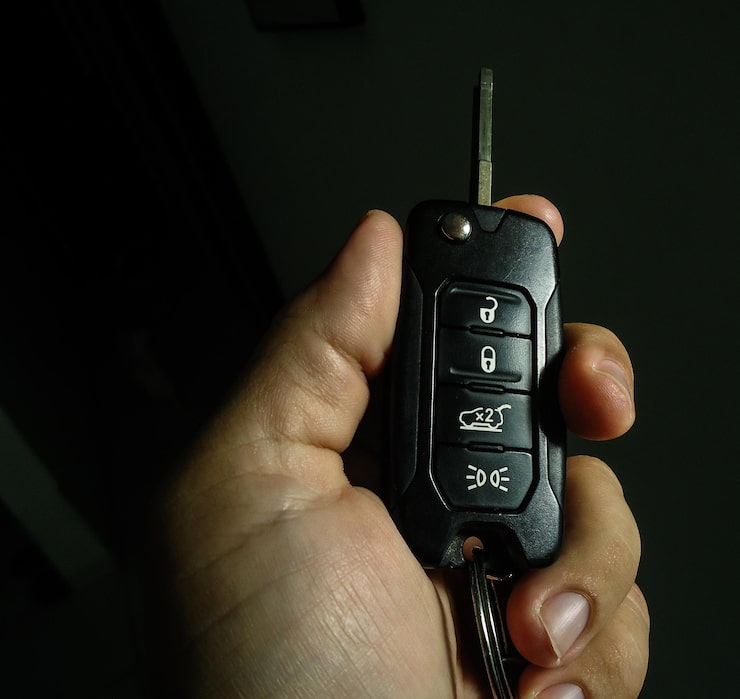
It’s easy to underestimate how much work a Mercedes key fob is actually doing. Beyond locking and unlocking the doors, the fob communicates with the vehicle’s immobilizer, authenticates to the EIS before the engine will start, and in newer models handles proximity sensing for keyless entry and push-button start. When it stops working reliably, the effects go well beyond the inconvenience of manually using a key blade.
For Brickell residents specifically, Key Fob Replacement Brickell is a service that comes up more often than you’d expect — not just from fobs that are lost or physically damaged, but from fobs that have degraded over time. The internal battery is the obvious first culprit, but that’s also frequently the wrong diagnosis. A fob that keeps requiring battery replacements, or that works intermittently even with a fresh battery, often has an internal component failure that a battery swap won’t fix.
Replacement vs. Reprogramming: Understanding the Difference
Not every key fob issue requires a full replacement. Sometimes the fob’s programming has simply drifted out of sync with the vehicle — which can happen after a dead battery, after the vehicle’s battery has been disconnected, or in some cases after a module replacement elsewhere in the car. In these situations, reprogramming the existing fob back to the vehicle resolves the issue without the cost of a new unit.
When a full replacement is necessary, the process on a Mercedes involves more than ordering a new fob and handing it over. The replacement unit needs to be cut to the correct blade profile, programmed with the vehicle’s specific immobilizer codes, and synced to the EIS so the car recognizes it as an authorized key. Done correctly, it’s seamless. Done incorrectly — or with an aftermarket fob that doesn’t meet Mercedes specifications — it can create authentication failures that are harder to resolve than the original problem.
Kendall Owners Aren’t Left Out of This Conversation
While Brickell draws attention as a hub for Mercedes-Benz ownership in Miami, the picture extends well south and west into Kendall. The area is home to a substantial number of Mercedes drivers — GLE and GLS owners with families, professionals in E-Class and C-Class sedans, and performance-oriented drivers in AMG variants — and their service needs are just as specific.
Access to reliable Key Replacement Kendall services has historically been limited to dealership visits, which come with the usual tradeoffs: scheduling delays of several days, service writer communication that doesn’t always explain what’s happening clearly, and pricing that leaves little room for discussion. An independent specialist with proper Mercedes programming capability who serves both Brickell and Kendall fills a genuine gap for owners in both areas.
The key — no pun intended — is consistency. Whether a driver is in Brickell or Kendall, the quality of the diagnostic work, the programming process, and the communication should be the same. That’s what separates a specialist from a generalist who happens to have a key cutting machine in the corner.
Putting It All Together: Why the Right Specialist Changes Everything
There’s a pattern that plays out repeatedly with Mercedes owners who’ve had frustrating service experiences. They went to a shop that seemed capable, got a repair done, and the problem either returned or a new one appeared shortly after. Looking back, the common thread is almost always the same: the initial diagnostic step was skipped, rushed, or done with tools that weren’t up to the job.
A Mercedes-Benz is a system of systems. The ignition communicates with the immobilizer, which talks to the EIS, which handshakes with the engine control unit. The key fob’s signal is processed through multiple modules before the car will respond. A fault in one area creates stress in adjacent areas, and a repair that doesn’t account for the full picture tends to leave something behind.
What to Look for Before Committing to a Shop
Before handing over your keys to any shop for Mercedes work, a few questions are worth asking directly. Do they have XENTRY or equivalent Mercedes-specific diagnostic software? Have they worked on your specific model and generation? Will they show you the diagnostic data before recommending any repairs? A shop that answers all three with confidence — and can back it up — is worth your time. One that deflects or pivots to a quote before a diagnosis is not.
In a neighborhood like Brickell, and across the broader Miami area including Kendall, the options exist. The difference is knowing what to look for and not settling for less than the diagnostic standard your vehicle actually requires.
The Bottom Line
Whether your Mercedes is throwing warning lights you can’t explain, struggling to start reliably, showing signs of ignition trouble, or leaving you with a key fob that’s more frustration than convenience — the answer is the same: start with a proper diagnosis from someone equipped to actually do it right.
Your car already knows what’s wrong. The job of the right specialist is to listen to it correctly, translate what it’s saying, and fix the right thing the first time. In Brickell, in Kendall, and anywhere in between — that standard is what you should expect, and what you deserve.