Why First-Time Mercedes Diagnostics Matter
There’s a scenario that plays out more often than most Mercedes owners expect. The key fob stops working. Maybe the buttons feel unresponsive, or the car doesn’t unlock from a distance the way it used to. The owner assumes it’s just a dead battery, swaps it out, and for a few days everything seems fine — then the same problem comes back. Or worse, the replacement fob they ordered online programs partway and then stops communicating with the vehicle altogether.
This is one of the most common and most frustrating key problems with modern Mercedes-Benz vehicles, and it almost always comes back to the same root issue: the problem wasn’t properly diagnosed before a solution was attempted. Understanding how mercedes computer diagnostics fit into the key replacement process — and why cutting corners on mercedes remote key replacement leads to repeat failures — can save you a lot of time, money, and aggravation.
Why a Mercedes Key Is Not Just a Key
If you’ve owned a Mercedes for any length of time, you already know the vehicle is sophisticated in ways that other cars aren’t. That sophistication extends all the way down to the key. A modern Mercedes remote key isn’t simply a transmitter that unlocks the door and signals the ignition. It contains an encrypted transponder chip that communicates with the vehicle’s Electronic Ignition Switch (EIS) module. Every time you press a button or insert the key to start the car, the vehicle and the key exchange encrypted data. If the data doesn’t match — because the key is damaged, unprogrammed, or paired with the wrong vehicle — the car’s immobilizer system activates and the engine won’t start, regardless of what the key does mechanically.
This is by design. Mercedes built these systems to make theft extremely difficult. But it also means that replacing a key requires more than cutting a new piece of metal and handing it over. The replacement key has to be cryptographically paired to the specific vehicle, and that pairing has to be done with the right equipment by someone who understands how the Mercedes security architecture actually works.
The Role of Mercedes Computer Diagnostics in Key and Fob Issues
Before any key replacement or fob programming happens, a proper diagnostic scan should be the very first step. This is true whether the issue is a fob that’s completely stopped working, a key that only works intermittently, or a situation where the vehicle is showing warning lights related to the key or start system.
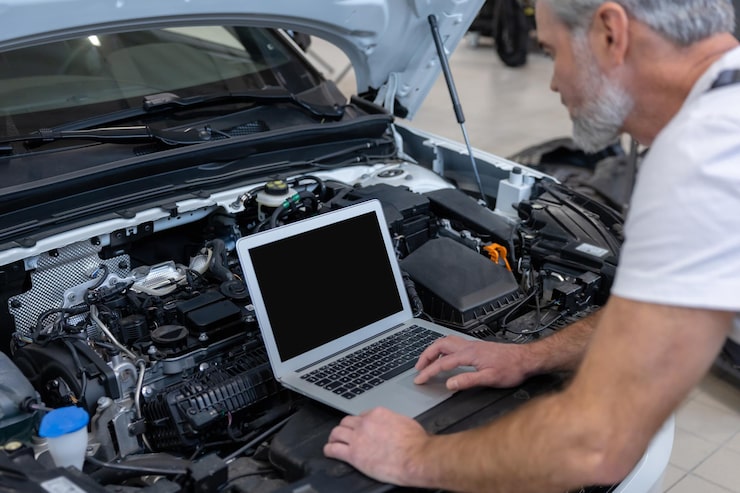
Mercedes computer diagnostics pull fault codes from multiple control units simultaneously — the EIS module, the ECU, the body control module, and in newer vehicles, the comfort access system. These fault codes tell a trained technician exactly what’s happening inside the car’s communication network. Is the EIS module failing to recognize the key? Is the key transmitter sending a signal but the car’s receiver isn’t registering it? Is there a module programming error from a previous repair attempt? All of this shows up in the diagnostic data.
Skipping this step is the single biggest mistake people make when dealing with Mercedes key and fob problems. It’s understandable — diagnostics add time and cost upfront — but going straight to a replacement key without knowing what caused the original failure often means the new key develops the same problem. Or the new fob can’t be programmed because there’s an underlying module fault that needs to be resolved first.
A proper diagnostic scan takes twenty to thirty minutes and gives you a clear picture of what’s actually wrong. Everything else follows from there.
Common Key Fob Problems That Lead to Replacement
Not every fob issue requires a full replacement. Sometimes the problem is the battery, sometimes it’s a damaged button membrane, and occasionally it’s a weak signal caused by interference. But there are specific symptoms that reliably indicate the fob itself has failed and needs to be replaced.
The Fob Works Inconsistently From Short Distances
If you’re practically pressing the fob against the door handle before the car responds, the internal transmitter is weakening. This will progressively get worse until the fob stops working entirely. A new battery rarely fixes this — the transmitter circuit itself has degraded.
The Car Doesn’t Detect the Key for Push-to-Start
On Mercedes models with keyless go, the vehicle continuously broadcasts a low-frequency signal to detect the key fob’s presence. If the car stops sensing the key when it’s inside the vehicle — or only senses it when held in a specific position — the key’s receive antenna is failing. This is a fob replacement situation, not a battery issue.
Water Damage
South Florida’s climate doesn’t forgive. Fobs that have been exposed to rain, dropped in water, or just consistently carried through humid environments eventually develop corrosion on the internal circuit board. Once that happens, no amount of drying out or battery swapping will restore reliable function.
The Fob Was Lost and a New One Was Never Properly Programmed
This is particularly common with Key Replacement Biscayne customers who have tried ordering replacement fobs online. Generic fobs advertised as compatible with Mercedes vehicles often require dealer-level programming that the seller doesn’t mention upfront. The result is a fob that was never fully paired to the vehicle and works only partially — or not at all.
What a Proper Mercedes Remote Key Replacement Actually Involves
Once diagnostics have confirmed that a new fob or remote key is needed, the replacement process involves several steps that have to happen in the right order.
Sourcing the Correct Key for the Vehicle
Mercedes uses different key and fob systems across model years and vehicle lines. An E-Class from 2018 uses a different key system than a C-Class from 2014 or a GLE from 2022. Part of the mercedes remote key service process is confirming the exact key type required for the specific vehicle, not just the model name.
Cutting the Emergency Blade
Even on keyless models, most Mercedes keys contain a fold-out mechanical blade used for the door lock cylinder and as a backup ignition method. That blade has to be cut to the specific vehicle’s lock code, which is why ordering a blank key online and bringing it to a generic locksmith often doesn’t work — they don’t have access to the Mercedes key cutting database.
Transponder Programming and EIS Pairing
This is the most critical step and the one that requires specialized equipment. The new key’s transponder chip has to be initialized and then paired to the vehicle’s EIS module using Mercedes-specific programming software. At Mercedes Keys Miami, this is handled with the same caliber of diagnostic and programming tools used at factory level — not generic OBD-II programmers that work on some vehicles and fail on others.
Verification
Once the key is programmed, a final scan confirms that the EIS module has accepted the new key, that no fault codes were introduced during programming, and that all functions — remote locking, keyless entry if applicable, and ignition — are working correctly.
Serving Biscayne, Doral, and the Greater Miami Area
One of the most practical advantages of working with a mobile specialist is that the service comes to you — which matters a lot when the issue is a key or fob that’s preventing you from driving the car in the first place.
For residents dealing with key fob issues in the Biscayne area, Key Fob Replacement Biscayne is available on-site, whether you’re at home near the bay or parked along the corridor. The full diagnostic and replacement process is handled on location — no towing, no waiting for a dealer appointment that might be days out.
The same applies to Mercedes Key Fob Replacement Doral, where a large number of Mercedes owners in the corporate and residential communities along NW 87th Avenue and the Doral Park area have relied on mobile service to resolve key and fob issues without disrupting their workday. For business owners and professionals who can’t afford to have a vehicle out of commission for half a day, the ability to have Mercedes Remote Key Service Doral handled in a parking lot or garage makes a real difference.
Mercedes Remote Key Service Miami covers the full metro area, including neighborhoods and communities that are often underserved by traditional locksmith shops that don’t carry the right Mercedes programming equipment.
Mercedes Transponder Key Services Miami: When the Key Looks Fine but the Car Won’t Start
Transponder key failures deserve their own mention because they’re genuinely confusing. The key looks intact, it turns in the ignition, but the engine won’t fire. No crank, or crank without start. Many owners at this point assume it’s a battery or starter issue and call a mechanic — only to be told there’s nothing wrong with the engine.
Mercedes Transponder Key services Miami addresses exactly this situation. When the transponder chip inside the key fails — due to age, physical shock, or corruption of the encrypted data — the immobilizer interprets it as an unauthorized key and prevents starting. The fix isn’t mechanical at all; it’s re-programming the transponder or replacing the key and pairing a new one to the vehicle.
This is another case where starting with mercedes computer diagnostics saves significant time. The diagnostic scan will show an immobilizer fault code that points directly at the key as the cause, rather than sending the owner down an expensive rabbit hole of chasing engine problems that don’t exist.
A Note on Dealership Alternatives
The dealership is a legitimate option for key replacement and diagnostics — but it’s rarely the most practical one. Wait times for service appointments at Mercedes-Benz dealerships in the Miami area can stretch several days. If your key issue is leaving you without a working vehicle, that’s not a timeline most people can absorb.
Beyond timing, dealership pricing for key replacement and programming tends to be significantly higher than what a certified mobile specialist charges for the same work with the same quality of programming equipment. The Mercedes Keys Miami team comes to your location, completes the full diagnostic and replacement process on-site, and in most cases has the vehicle working correctly within an hour.
Final Thoughts
The pattern that causes the most frustration for Mercedes owners dealing with key and fob issues is attempting a fix before understanding the actual problem. A battery swap, a generic replacement fob, a quick locksmith who doesn’t have Mercedes-specific tools — these approaches feel faster and cheaper in the moment, but they frequently result in repeat failures and, sometimes, in programming errors that make the eventual proper repair more complicated.
Starting with mercedes computer diagnostics, then proceeding to a proper mercedes remote key replacement using the right equipment and the right process, gets the problem solved once — not twice. If you’re in Miami, Biscayne, Doral, or anywhere in the surrounding area and dealing with a key or fob that isn’t working the way it should, reach out to Mercedes Keys Miami at 786-862-6200. Mobile service means we come to wherever the car is — and we don’t leave until it’s working.